**NVIDIA Vulkan Ray Tracing Tutorial**
**Instances**
Author: [Martin-Karl Lefrançois](https://devblogs.nvidia.com/author/mlefrancois/)
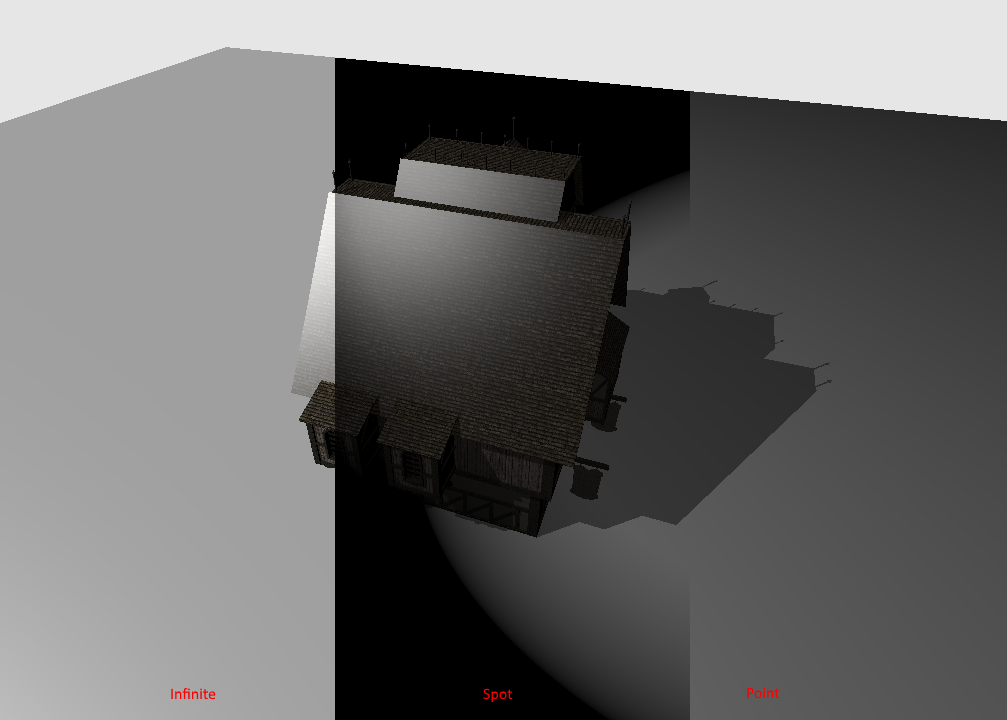
This is an extension of the Vulkan ray tracing [tutorial](vkrt_tutorial.md.htm).
Ray tracing allow to use [callable shaders](https://www.khronos.org/registry/vulkan/specs/1.1-extensions/html/chap8.html#shaders-callable)
in ray-generation, closest-hit, miss or another callable shader stage.
It is similar to an indirect function call, whitout having to link those shaders with the executable program.
(insert setup.md.html here)
# Data Storage
Data can only access data passed in to the callable from parent stage. There will be only one structure pass at a time and should be declared like for payload.
In the parent stage, using the `callableDataEXT` storage qualifier, it could be declared like:
~~~~ C++
layout(location = 0) callableDataEXT rayLight cLight;
~~~~
where `rayLight` struct is defined in a shared file.
~~~~ C++
struct rayLight
{
vec3 inHitPosition;
float outLightDistance;
vec3 outLightDir;
float outIntensity;
};
~~~~
And in the incoming callable shader, you must use the `callableDataInEXT` storage qualifier.
~~~~ C++
layout(location = 0) callableDataInEXT rayLight cLight;
~~~~
# Execution
To execute one of the callable shader, the parent stage need to call `executeCallableEXT`.
The first parameter is the SBT record index, the second one correspond to the 'location' index.
Example of how it is called.
~~~~ C++
executeCallableEXT(pushC.lightType, 0);
~~~~
# Adding Callable Shaders to the SBT
## Create Shader Modules
In `HelloVulkan::createRtPipeline()`, immediately after adding the closest-hit shader, we will add
3 callable shaders, for each type of light.
~~~~ C++
// Callable shaders
vk::RayTracingShaderGroupCreateInfoKHR callGroup{vk::RayTracingShaderGroupTypeKHR::eGeneral,
VK_SHADER_UNUSED_KHR, VK_SHADER_UNUSED_KHR,
VK_SHADER_UNUSED_KHR, VK_SHADER_UNUSED_KHR};
vk::ShaderModule call0 =
nvvk::createShaderModule(m_device,
nvh::loadFile("shaders/light_point.rcall.spv", true, paths));
vk::ShaderModule call1 =
nvvk::createShaderModule(m_device,
nvh::loadFile("shaders/light_spot.rcall.spv", true, paths));
vk::ShaderModule call2 =
nvvk::createShaderModule(m_device, nvh::loadFile("shaders/light_inf.rcall.spv", true, paths));
callGroup.setGeneralShader(static_cast(stages.size()));
stages.push_back({{}, vk::ShaderStageFlagBits::eCallableKHR, call0, "main"});
m_rtShaderGroups.push_back(callGroup);
callGroup.setGeneralShader(static_cast(stages.size()));
stages.push_back({{}, vk::ShaderStageFlagBits::eCallableKHR, call1, "main"});
m_rtShaderGroups.push_back(callGroup);
callGroup.setGeneralShader(static_cast(stages.size()));
stages.push_back({{}, vk::ShaderStageFlagBits::eCallableKHR, call2, "main"});
m_rtShaderGroups.push_back(callGroup);
~~~~
And at the end of the function, delete the shaders.
~~~~ C++
m_device.destroy(call0);
m_device.destroy(call1);
m_device.destroy(call2);
~~~~
### Shaders
Here are the source of all shaders
* [light_point.rcall](https://github.com/nvpro-samples/vk_raytracing_tutorial_KHR/blob/master/ray_tracing_callable/shaders/light_point.rcall)
* [light_spot.rcall](https://github.com/nvpro-samples/vk_raytracing_tutorial_KHR/blob/master/ray_tracing_callable/shaders/light_spot.rcall)
* [light_inf.rcall](https://github.com/nvpro-samples/vk_raytracing_tutorial_KHR/blob/master/ray_tracing_callable/shaders/light_inf.rcall)
## Passing Callable to traceRaysKHR
In `HelloVulkan::raytrace()`, we have to tell where the callable shader starts. Since they were added after the hit shader, we have in the SBT the following.
********************
* +---------+
* | ray-gen |
* +---------+
* | miss0 |
* | miss1 |
* +---------+
* | hit0 |
* +---------+
* | call0 |
* | call1 |
* | call2 |
* +---------+
********************
Therefore, the callable starts at `4 * progSize`
~~~~ C++
vk::DeviceSize callableGroupOffset = 4u * progSize; // Jump over the previous shaders
vk::DeviceSize callableGroupStride = progSize;
~~~~
Then we can call `traceRaysKHR`
~~~~ C++
const vk::StridedBufferRegionKHR callableShaderBindingTable = {
m_rtSBTBuffer.buffer, callableGroupOffset, progSize, sbtSize};
cmdBuf.traceRaysKHR(&raygenShaderBindingTable, &missShaderBindingTable, &hitShaderBindingTable,
&callableShaderBindingTable, //
m_size.width, m_size.height, 1); //
~~~~
# Calling the Callable Shaders
In the closest-hit shader, instead of having a if-else case, we can now call directly the right shader base on the type of light.
~~~~ C++
cLight.inHitPosition = worldPos;
//#define DONT_USE_CALLABLE
#if defined(DONT_USE_CALLABLE)
// Point light
if(pushC.lightType == 0)
{
vec3 lDir = pushC.lightPosition - cLight.inHitPosition;
float lightDistance = length(lDir);
cLight.outIntensity = pushC.lightIntensity / (lightDistance * lightDistance);
cLight.outLightDir = normalize(lDir);
cLight.outLightDistance = lightDistance;
}
else if(pushC.lightType == 1)
{
vec3 lDir = pushC.lightPosition - cLight.inHitPosition;
cLight.outLightDistance = length(lDir);
cLight.outIntensity =
pushC.lightIntensity / (cLight.outLightDistance * cLight.outLightDistance);
cLight.outLightDir = normalize(lDir);
float theta = dot(cLight.outLightDir, normalize(-pushC.lightDirection));
float epsilon = pushC.lightSpotCutoff - pushC.lightSpotOuterCutoff;
float spotIntensity = clamp((theta - pushC.lightSpotOuterCutoff) / epsilon, 0.0, 1.0);
cLight.outIntensity *= spotIntensity;
}
else // Directional light
{
cLight.outLightDir = normalize(-pushC.lightDirection);
cLight.outIntensity = 1.0;
cLight.outLightDistance = 10000000;
}
#else
executeCallableEXT(pushC.lightType, 0);
#endif
~~~~
# Final Code
You can find the final code in the folder [ray_tracing_callable](https://github.com/nvpro-samples/vk_raytracing_tutorial_KHR/tree/master/ray_tracing_callable)